Jasmine Carroll
artist & educator
research!
This page brings together my research, documentation of ideas and the influencers who inform my practice as both an artist and an educator.
education
This essay critiques the Leaving Certificate curriculum for prioritising a competitive “points race” over meaningful learning and preparation for third-level education. Drawing on personal experience and research, it highlights how high-stakes assessment discourages intrinsic motivation, deep learning, and extracurricular engagement while increasing stress. The essay argues for Senior Cycle reform that values skills, creativity, and diverse pathways, better aligning curriculum with students’ educational futures.
December 2025

This essay traces the development of Irish second-level education from the foundation of the State in 1922, highlighting key reforms such as the revival of the Irish language, the introduction of vocational, comprehensive, and community schools, and the move towards free post-primary education. It critically examines how access, equality, and curriculum structures evolved, noting both progress and persistent issues such as gender inequality and limited educational access. The essay concludes by identifying the 1995 White Paper Charting Our Education Future as a defining moment that shaped modern Irish education through its focus on equality, partnership, inclusion, and diverse pathways for learners.
December 2022
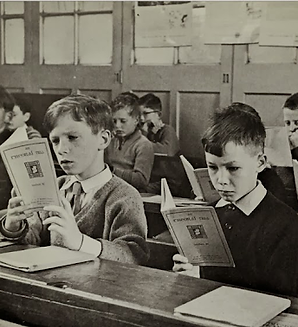
This essay critiques the Irish education system, arguing it prioritizes economic outcomes over individual potential, using theories like McDonaldization, Human Capital, and Conflict Theory. It links this mechanized, exam-focused schooling to student stress, inequality, and limited career freedom. To conclude, the essay reflects personally, advocating for reforms that nurture creativity, individuality, and meaningful learning.
December 2022

online inspirations
Highlighting the online resources that inspire and inform my work, These accounts provide ideas, guidance and examples that shape my teaching approach and units of learning.


visual culture
This research essay explores the rise, global success, and near-erasure of Nottingham Lace, framed by my own family’s multigenerational connection to the trade. It examines how exploitation and technological innovation endangered the craft, while highlighting the museums, manufacturers, and contemporary artists working to preserve and reimagine it. Ultimately, the project reflects on how heritage, memory, and practice-based making can sustain the future of a fragile tradition.
January 2025
This essay examines how Shakespeare both liberates and limits female characters through rigid gender categories, shaped by Elizabethan social norms. Through King Lear, it argues that women who conform to traditional femininity are rewarded, while those who seek power or independence are punished, reinforcing patriarchy. In contrast, Twelfth Night presents gender fluidity through Viola as a path to liberation, suggesting that freedom lies in challenging and blending gender categories rather than adhering to them.
April 2024
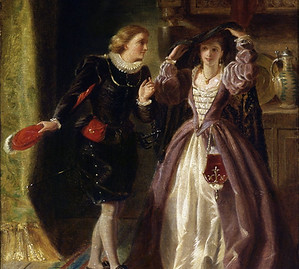
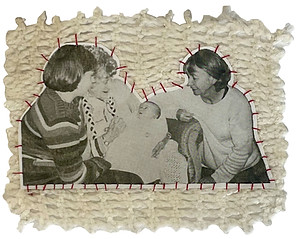
This essay argues that family photographs construct selective and often fictional narratives rather than objective truths, shaped by social expectations, memory, and desire. Tracing the rise of domestic photography through Kodak, it examines how images can conceal trauma, conflict, and identity—while also offering hope, comfort, and belonging. Through case studies ranging from LGBTQ+ family archives to historical and contemporary examples, the essay concludes that family photos reflect how people wish to be seen, not necessarily how they truly lived.
March 2023

artist research
The artists featured here play a key role in shaping my creative thinking and practice, influencing both my ideas and the way I approach my studio practice
Alice Fox is a British contemporary textile artist whose work explores the relationship between nature, place, and memory through the use of found objects and gathered materials. She is known for transforming everyday and natural materials into sculptural 3D forms, often constructed from or inspired by 2D textile processes.

image courtesy of alicefox.co.uk
Fiona Harrington is an Irish textiles artist who depicts Irish landmarks through traditional lace making techniques Inspired by her natural surroundings, her work allows a glimpse into rural Ireland. Paying homage to her family history, Harrington's ability to fuse traditional and contemporary techniques create her own unique style.
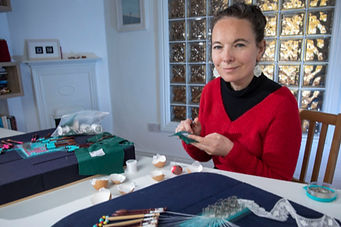
image courtesy of fionaharrington.com
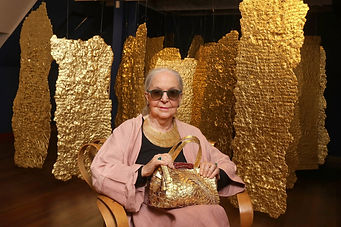
Olga de Amaral is a Colombian textile artist whose work expands traditional weaving into sculptural and architectural woven walls. Her experimental use of non-traditional materials, texture, and layering challenges the boundaries between art and craft and allows us to explore her culture and its struggles with colonialism.
image courtesy of salon94.com